

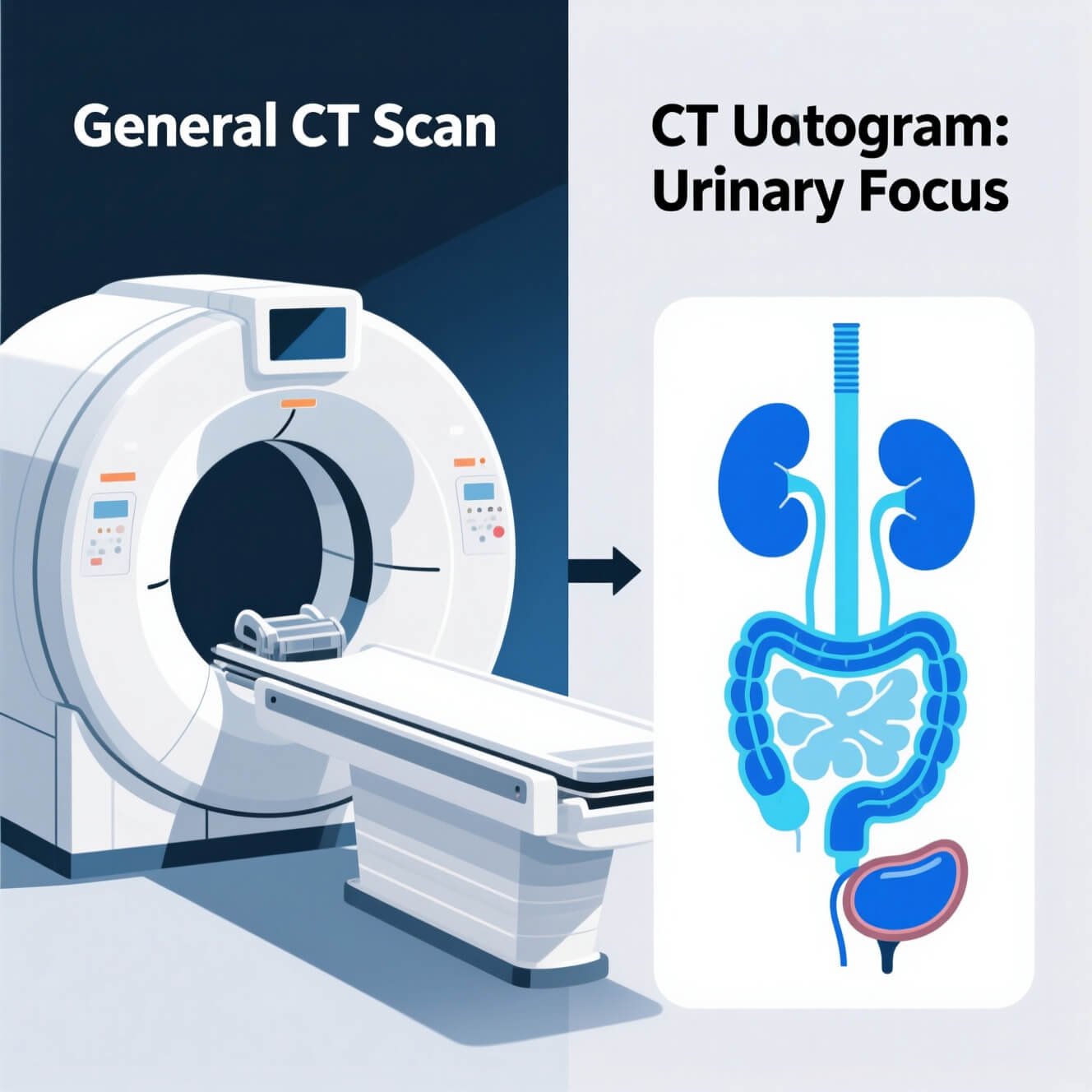
Hey, if you’ve ever had to deal with medical imaging or know someone who has, you might have come across terms like CT scan and CT urogram. They sound similar, but they’re not the same thing. A CT scan is a general tool doctors use to examine the inside of your body, while a CT urogram is a more specialized test, focusing on your urinary system. In this article, I’ll break it all down for you: what each one is, how they work, when you’d need them, and the key differences. We’ll also cover preparation, risks, and benefits. By the end, you’ll have a clear understanding to help you better comprehend these procedures. Let’s dive in.
What Is a CT Scan?
A CT scan, short for computed tomography scan, is an imaging test that uses X-rays to create detailed pictures of the inside of your body. Think of it as taking slices of your body and putting them together like a 3D puzzle. Doctors use it to see bones, blood vessels, and soft tissues in a way that’s much more detailed than a regular X-ray.
The machine looks like a big doughnut with a table that slides through it. You lie on the table, and the scanner rotates around you, taking multiple images from different angles. A computer then processes these to make cross-sectional views or even 3D models. CT scans can be done on almost any part of the body, from your head to your toes.
They’re versatile and quick, usually taking about 30 minutes or less with modern machines. Sometimes, a contrast dye is used to make certain areas stand out more, but not always. This dye can be swallowed, injected, or given another way, depending on what the doctor is looking for.
What Is a CT Urogram?
Now, a CT urogram is basically a type of CT scan, but it’s tailored specifically for your urinary tract. That includes your kidneys, ureters (the tubes that carry urine from the kidneys to the bladder), and bladder. It’s designed to give a close-up view of these areas to spot issues like stones, tumors, or blockages.
The “urogram” part comes from “urography,” which means imaging the urinary system. During this test, a contrast dye is always injected into a vein in your arm or hand. This dye travels through your bloodstream to your kidneys and then into your urine, highlighting the entire urinary path. The scan takes pictures at different times to capture how the dye moves through the system.
It’s more focused than a general CT scan, often involving multiple phases: one without contrast to spot stones, another right after the dye is injected to see blood flow, and a delayed one to watch the dye fill the bladder. The whole thing can take up to 90 minutes, including wait times for the dye to work its way through.

Key Differences Between a CT Scan and a CT Urogram
So, what’s the main difference? A CT urogram is a specialized version of a CT scan aimed at the urinary system, while a regular CT scan can check out pretty much any body part. Here’s a breakdown to make it clearer:
- Purpose and Focus: A standard CT scan is broad—it might look at your chest for lung issues, your abdomen for organ problems, or your head for brain injuries. A CT urogram zeros in on the kidneys, ureters, and bladder to diagnose urinary tract conditions.
- Use of Contrast Dye: Regular CT scans might or might not use contrast, depending on what’s being examined. For example, a head CT often doesn’t need it. But a CT urogram always uses intravenous contrast to outline the urinary structures and show how they function.
- Procedure Length and Phases: A basic CT scan is usually quick, with one pass through the machine. A CT urogram involves several scans at timed intervals to capture the dye’s progress, making it longer.
- What They Detect: Both use X-rays, but the urogram is better for spotting things like kidney stones, bladder tumors, or ureter blockages because of the dye’s highlighting effect. A general CT might miss subtle urinary issues without that focus.
In short, if your doctor suspects a problem in your urinary system, they’ll likely go for the urogram. For other areas, a standard CT does the job.
To compare them side by side:
| Aspect | CT Scan | CT Urogram |
|---|---|---|
| Focus Area | Any body part | Urinary tract (kidneys, ureters, bladder) |
| Contrast Dye | Optional | Always used intravenously |
| Duration | About 30 minutes | Up to 90 minutes |
| Phases | Usually single | Multiple (non-contrast, post-contrast, delayed) |
| Common Uses | General diagnosis, trauma, cancer monitoring | Hematuria, stones, urinary infections |
This table shows how the urogram builds on the CT technology but adapts it for specific needs.
How Does a CT Scan Work?
Let’s get into the nuts and bolts. In a CT scan, you lie still on a table that moves through the scanner. The X-ray tube spins around you, sending beams through your body. Detectors on the other side pick up how much radiation passes through different tissues—bones block more, soft tissues less.
A computer turns this data into images. If contrast is used, it makes blood vessels or organs brighter, helping spot abnormalities like tumors or clots. The tech runs the machine from another room, talking to you through a speaker. You might hear whirring sounds, but it’s painless.
Afterward, a radiologist reviews the images and sends a report to your doctor. It’s straightforward and widely available.
How Does a CT Urogram Work?
A CT urogram follows a similar setup but with extras for the urinary focus. You start by lying on the table, and they might do a quick non-contrast scan first to check for stones or big issues.
Then, they insert an IV line and inject the contrast dye. You might feel a warm flush or metallic taste—that’s normal. The scanner takes images soon after to see the dye in your kidneys. After a delay (maybe 10-30 minutes), they scan again to capture the dye in your ureters and bladder.
This timing lets doctors see not just the structure but how well everything functions, like if urine flows properly. The multi-phase approach is what sets it apart, giving a dynamic view of your urinary system.
When Would You Need a CT Scan?
Doctors order CT scans for all sorts of reasons. If you’ve had a car accident, they might use one to check for internal bleeding or fractures. For ongoing issues, like monitoring cancer treatment or finding the source of chest pain, it’s a go-to tool.
It’s great for diagnosing things like bone tumors, infections, blood clots, or even guiding biopsies. If you have symptoms like headaches, shortness of breath, or abdominal pain without a clear cause, a CT can help pinpoint the problem.
Basically, anytime a detailed internal view is needed beyond what an ultrasound or X-ray provides.
When Would You Need a CT Urogram?
A CT urogram is typically for urinary tract concerns. If you notice blood in your urine, have pain in your side or lower back, or keep getting UTIs, this test can help investigate.
It’s used to find kidney stones, bladder stones, tumors, cysts, or structural problems like blockages. For cancer patients, it helps stage or monitor urinary cancers. If other tests, like an ultrasound, hint at an issue but aren’t clear, a urogram provides more detail.
It’s especially useful for asymptomatic hematuria (blood in urine without symptoms) or following up on known urinary conditions.
Preparation for Each Procedure
Preparation varies a bit. For a standard CT scan, you might need to avoid eating or drinking for a few hours if contrast is involved. Remove metal items like jewelry, and wear comfy clothes or a gown. If it’s for your abdomen, they might ask you to drink a contrast liquid.
For a CT urogram, it’s similar but often includes drinking water to fill your bladder—don’t pee until after the scan. They check your kidney function with a blood test beforehand to ensure the dye is safe. Tell your doctor about allergies, medications, or if you’re pregnant.
In both cases, share your medical history to avoid complications.
Risks and Side Effects
Both procedures involve radiation, so there’s a small risk of cancer from repeated exposure, but it’s minimal for one scan. The benefits usually outweigh this.
Contrast dye adds risks like allergic reactions—mild ones include itching or nausea; severe ones are rare but can involve breathing issues. Kidney problems can occur if your kidneys aren’t healthy, so they screen for that. Bruising at the IV site is possible.
Pregnant people should avoid both if possible, as radiation could affect the baby. Overall, CT urograms might have slightly higher risks due to always using contrast, but both are safe when needed.
Benefits of Each
The big benefit of a CT scan is its speed and versatility—it’s a powerhouse for quick, detailed diagnostics across the body. It helps catch issues early, guide treatments, and monitor progress.
For CT urograms, the advantage is precision in urinary imaging. The contrast and phased scans reveal functional problems that a standard CT might miss, leading to better diagnoses for kidney and bladder issues.
Both reduce the need for more invasive tests and improve patient outcomes.
Conclusion
Understanding the difference between a CT scan and a CT urogram can make medical decisions less intimidating. A CT scan is your all-purpose imaging tool, while a CT urogram is the specialist for urinary tract troubles. If your doctor recommends one, it’s because it fits your symptoms or condition. Always chat with them about any worries—preparation, risks, or what to expect. Staying informed helps you feel more in control.
Frequently Asked Questions
Is a CT urogram more painful than a regular CT scan?
No, both are painless. The only discomfort might be from the IV needle or holding still.
How much radiation is involved?
Both use low doses, but multiple scans in a urogram mean slightly more. It’s still safe for most people.
Can I drive after these tests?
Yes, unless you get a sedative, which is rare for adults.
What if I’m allergic to contrast dye?
Tell your doctor—they can premedicate you or choose another test.
How soon will I get results?
Usually within a few days, but emergencies can be faster.


